
Food Analytics &
Consulting
Over 50 years of experience as an independent,
privately run commercial laboratory
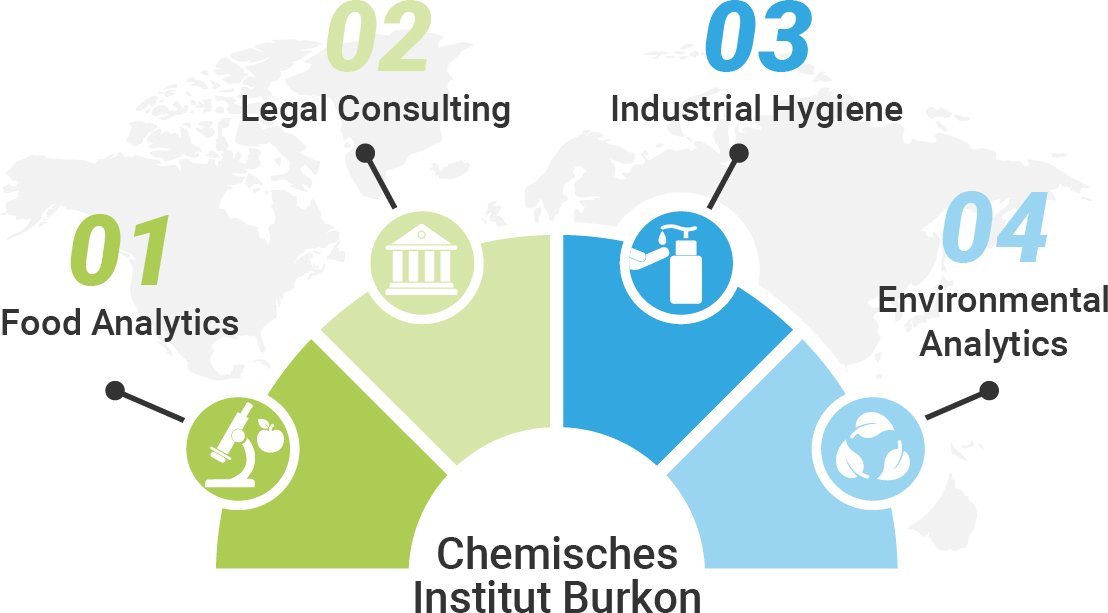
1. Food Analytics | 2. Legal Consulting | 3. Industrial Hygiene | 4. Environmental Analytics

Food is versatile – the questions
are complex
Is my product marketable?
How should the analytical results be interpreted?
Which analyses are recommended for my product?
Crisis situation – what comes next?
law an analytical questions.
News
-

-

We help you prepare for the MOAH maximum levels!
EU-wide maximum levels for mineral oil aromatic hydrocarbons (MOAH) in food are expected to apply in stages from 1 January 2027.
-

Analysis of edible fats and oils
Every day, we analyse fats and oils in our food testing laboratory for customers around the world. Our testing covers a wide range of parameters...
-

Glycerine (E 422): Other foods now also in focus
Following the recent focus on slush ice drinks due to the high intake of glycerine among children, official food control authorities have now also examined fine bakery products.
-

Automated MOSH/MOAH Analysis: Ready for the 2027 European Regulation?
As the European-wide MOSH/MOAH regulation comes into force on 1 January 2027, laboratories, manufacturers, and quality professionals are facing increasing pressure to ensure reliable testing and confident interpretation of results.
-

New EU Maximum Levels for 3-MCPD and Glycidyl Esters Published
Key takeaways from Regulation (EU) 2026/1825 at a glance
-

Planned Maximum Levels and New Indicative Levels for Acrylamide
Regulations regarding the process contaminant acrylamide are currently being revised at European level.
-

Mycotoxin Analysis and Monitoring in Food and Raw Materials
Regular notifications regarding aflatoxins and other mycotoxins in the RASFF (Rapid Alert System for Food and Feed) highlight that monitoring these compounds remains a fundamental element of quality assurance and food production.
-

Live at EPRW 2026!
This week, our Head of R&D Sebastian Wißmüller demonstrated this innovative drive on the big stage at the European Pesticide Residue Workshop in Rotterdam!
-
Maximum levels for MOAH in food adopted!
On 13 May 2026, the draft amendment to Regulation (EU) 2023/915 received a favourable vote
-
Maximum levels for MOAH are approaching
-
Spain: Temporary action limits for MOAH in food established
The Spanish Agency for Food Safety and Nutrition (AESAN) established temporary action limits for MOAH in food.
-

France tightens food import rules – Focus on pesticide residues
Since January 8, 2026, France has suspended the import and marketing of certain foods from non-EU countries if residues of prohibited pesticides are quantifiable.
-
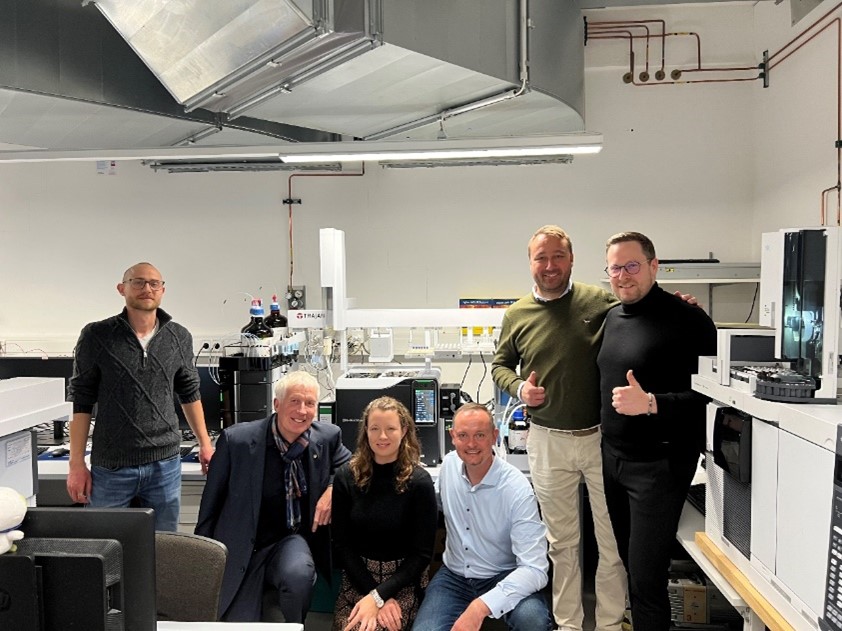
Innovation Meets Partnership: Our Collaboration with Shimadzu
Last week, we had the pleasure of welcoming Michael Lahme, Fabian Bröckelt, and Theresa Bader from Shimadzu Deutschland GmbH to our lab.
-
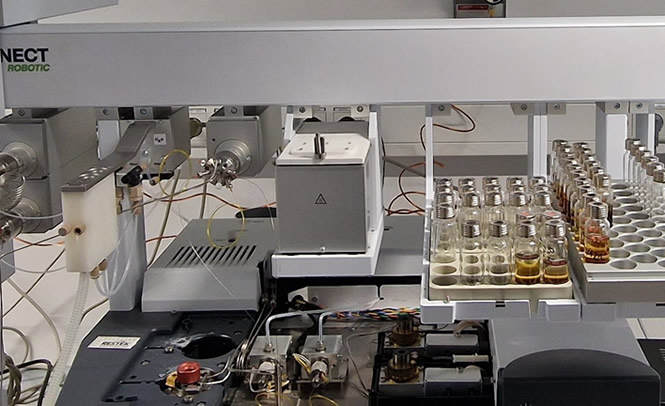
Update of the recommended benchmark levels for mineral oil hydrocarbons (MOH)
Recently, the European Commission proposed amendments to European Contaminants Regulation 2023/915, aiming to establish maximum levels for MOAH.
-
Inorganic arsenic: Regulation on additional maximum levels for inorganic arsenic in food adopted
The draft, which was adopted at the meeting of the Standing Committee on Plants, Animals, Food and Feed (SC PAFF) on 19 October 2022, contains lowered MLs for non-parboiled milled rice and specifications for new MLs for inorganic arsenic in rice flour, rice drinks, food for infants and young children, fruit juices and nectars, as well as a new ML for total arsenic in salt.
Training & Career
Professionals and qualified career changers
Chemical Institute Burkon employs laboratory chemists, biological technical assistants, chemical technical assistants, dairy laboratory assistants, chemists, chemical engineers, food chemists, analytical chemists, office assistants and many other qualified professionals. As a growing company, we are constantly looking for motivated applicants.